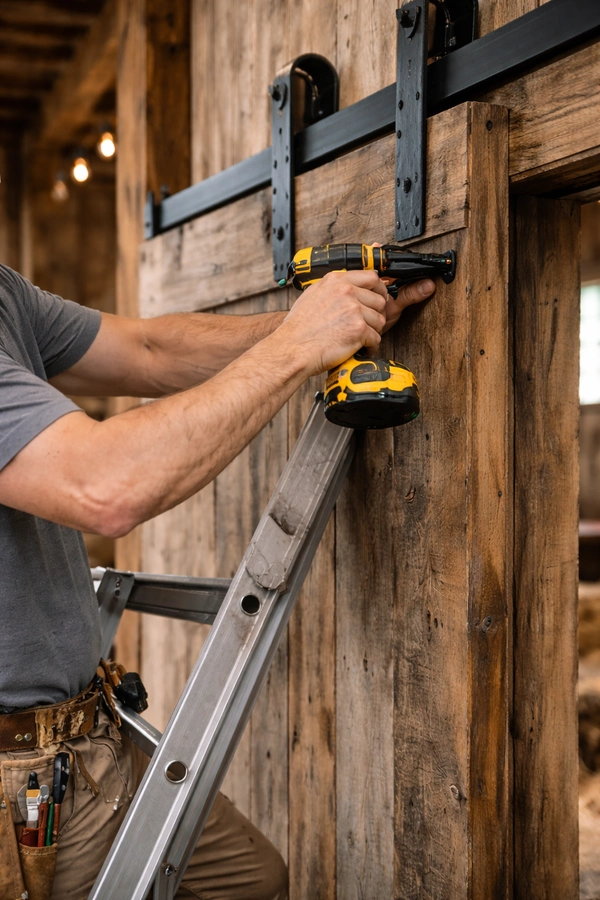
Barn door repair costs in Decatur, AL typically range between $46 and $279, depending on the type of door, extent of damage, and whether track or hardware repairs are needed. Pricing can also vary based on door size, access, and local labor rates.
| Repair Scenario | Typical Cost Range | What You’re Paying For |
|---|---|---|
| Adjust misaligned barn door | $139–$325 | Track alignment, roller adjustment, tuning |
| Replace worn rollers or hardware | $186–$558 | New rollers, fasteners, door re-hanging |
| Repair or replace barn door track | $279–$1,116 | Track removal, replacement, secure mounting |
| Fix loose or damaged wall mounting | $279–$1,395 | Blocking repair, wall reinforcement |
| Repair sticking or dragging barn door | $139–$465 | Height correction, floor clearance adjustment |
| Repair damaged or cracked barn door | $279–$1,860+ | Door repair or partial replacement |
| Repair double barn door system | $372–$2,325+ | Multi-door alignment and hardware repair |
Typical total: $186–$744 for common barn door repairs. Structural or hardware replacement repairs: $1,395+ is possible.
| Problem Type | Typical Repair Range | Why It Costs More (or Less) |
|---|---|---|
| Roller or wheel failure | $186–$558 | Hardware replacement and door re-hanging |
| Track damage or bending | $279–$1,116 | Track removal and precision remounting |
| Loose or damaged wall blocking | $279–$1,395+ | Wall opening and structural repair |
| Door dragging or floor contact | $139–$465 | Height and clearance adjustments |
| Cracked or warped door panel | $279–$1,860+ | Wood repair or partial replacement |
Rule: If the wall or door structure is compromised, replacement is more reliable than repeated repairs.
| Add-On | Typical Cost | Best Use |
|---|---|---|
| Upgrade to heavy-duty rollers | $139–$465 | Prevents repeat failures |
| Wall reinforcement or blocking | $279–$1,395 | Supports heavy doors |
| Soft-close hardware | $186–$558 | Smoother operation |
| Door removal and disposal | $93–$279 | Replacing damaged doors |
Barn door repairs rarely require permits, but repeated failures often indicate improper installation or insufficient wall support. Addressing the root cause prevents ongoing repair costs.
